Level select

Level 05Futuristic FPS Map

01 / 08

01 Level design · GAMES 3100

Futuristic FPS Map

A competitive multiplayer map for the Level Design course at the University of Utah. A classic 3-lane structure meets modern traversal: wall running, sliding and double jumps that add verticality and player choice.

Role
Solo Level Designer
Course
GAMES 3100, University of Utah
Timeline
Oct – Nov 2024
Engine
Unreal Engine 5 · Blueprints

I owned

  • The 3-lane layout, from paper to grey box to final.
  • Custom traversal Blueprints: slide, wall run, wall jump and double jump.
  • Cover and signifier tuning from playtests.

Context

  • Solo project for the GAMES 3100 Level Design course.
  • Balancing angles took several playtest passes.
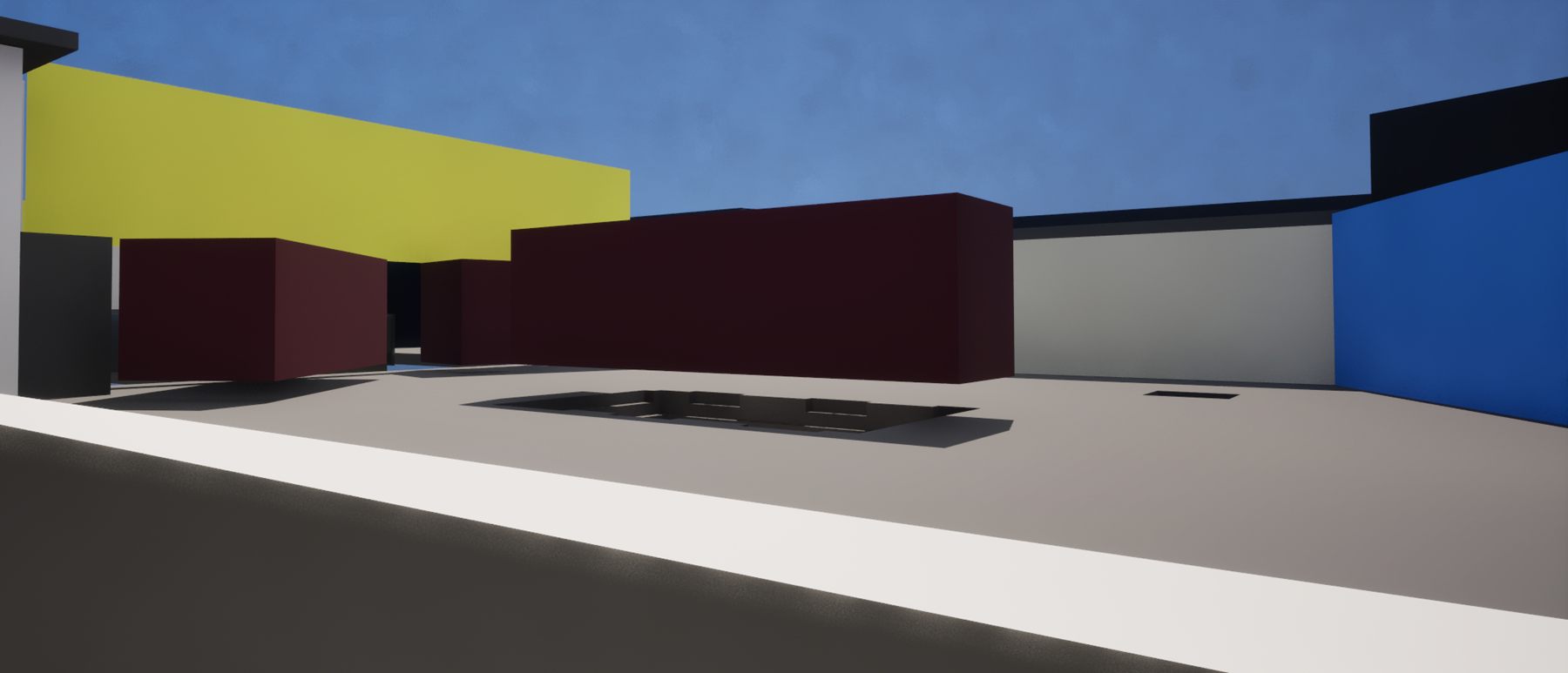
In-engine grey-box view of the map: yellow, maroon and blue blocks around a sunken pit under a blue sky.

02 Watch

The final level

03 Thought process

Scarce angles, abundant angles

  • Strategic depth from environmental details and traversal mechanics.
  • A balanced playfield with mirrored fairness for both sides.
  • Verticality (wall running, sliding, double jumps) for more sightlines and tactical options.
  • Pressure and opportunity: angles should feel scarce or abundant depending on where you stand.
  1. Concept & goals

    A futuristic multiplayer FPS rooted in competitive balance.

  2. Layout

    A 3-lane format for familiarity and fairness.

  3. Mechanics

    Crouch, slide and wall-run Blueprints, plus wall-jump detection.

  4. Iteration

    Cover placement and signifiers refined through playtests.

04 Layout

From paper to grey box

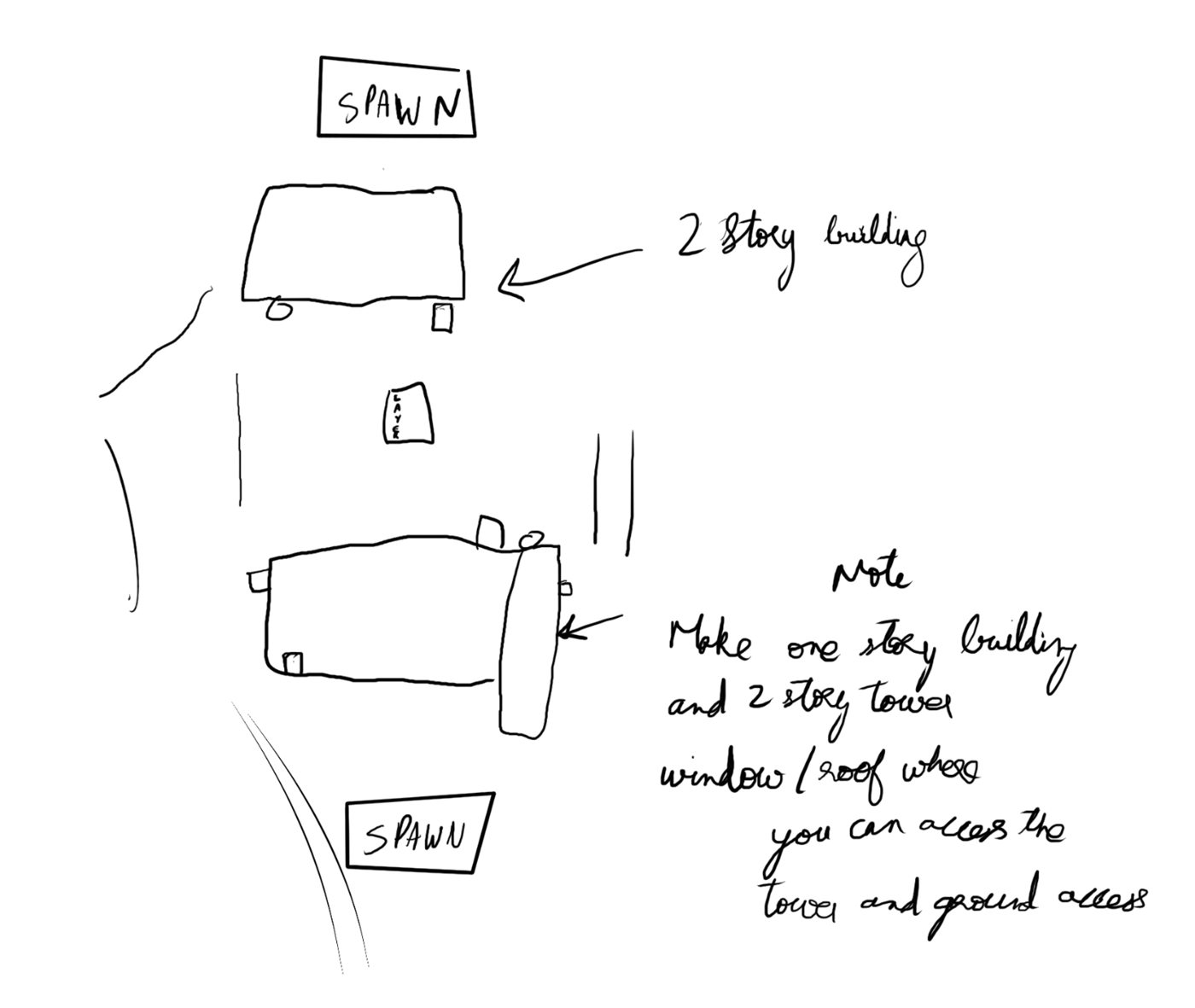
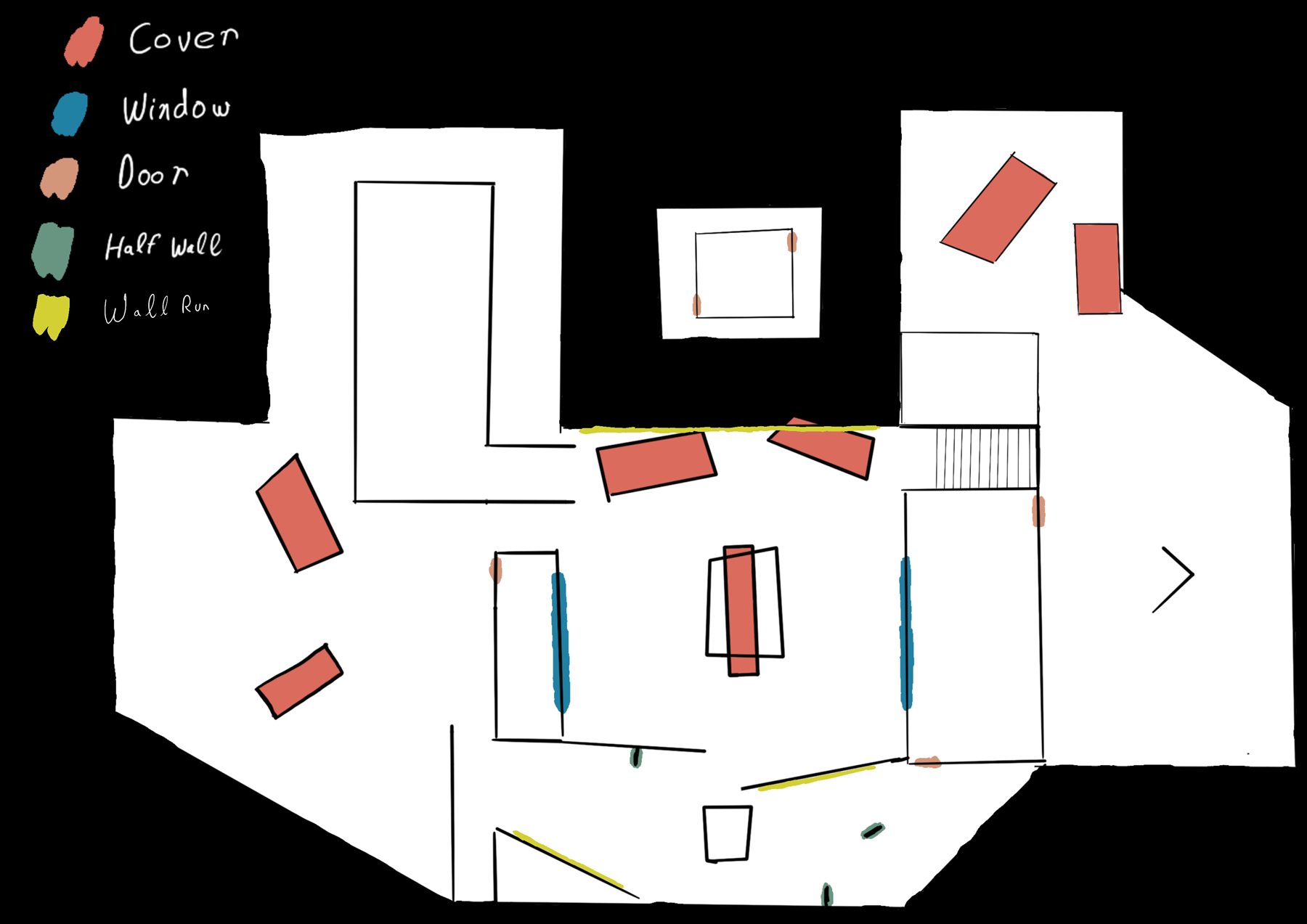
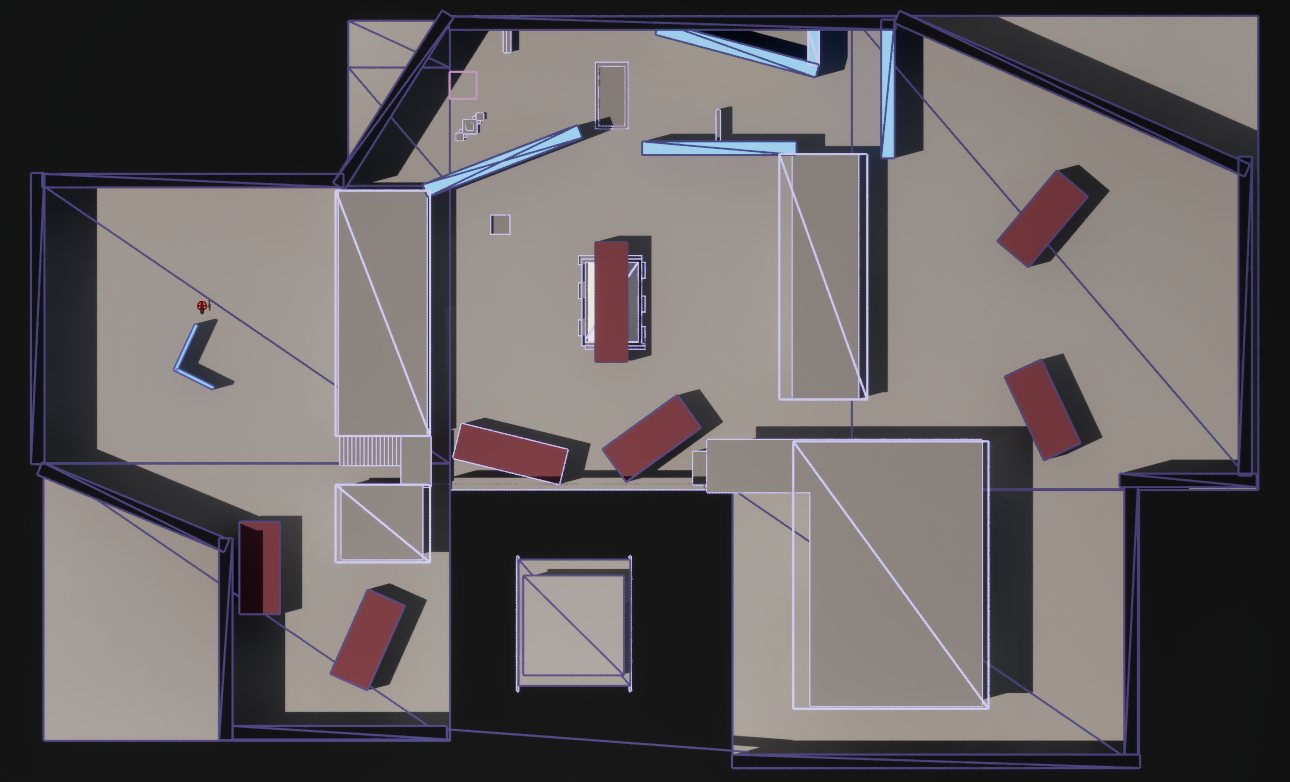
A quick sketch fixed the spawns and buildings. The paper layout then marks cover, windows, doors, half walls and wall-run surfaces, and the grey box keeps the same lanes and cover beats in engine.

First sketch Quick hand sketch of the map: two spawns, a two-story building, a one-story building with a tower, and a note about window and roof access.
FIG. 01First sketch: two spawns and the two main buildings.
Paper Hand-drawn top-down layout with a legend: red cover, blue windows, orange doors, green half walls and yellow wall-run surfaces.
FIG. 02Paper layout with a legend for cover, windows, doors, half walls and wall runs.
Grey box Top-down Unreal grey box of the map with maroon cover blocks and pale blue windows.
FIG. 03The grey box in Unreal, top-down.

06 Blueprints

Movement built for flow state

A custom controller that handles physics and camera dynamically, so movement feels fast and fair and the player never fights the controls.

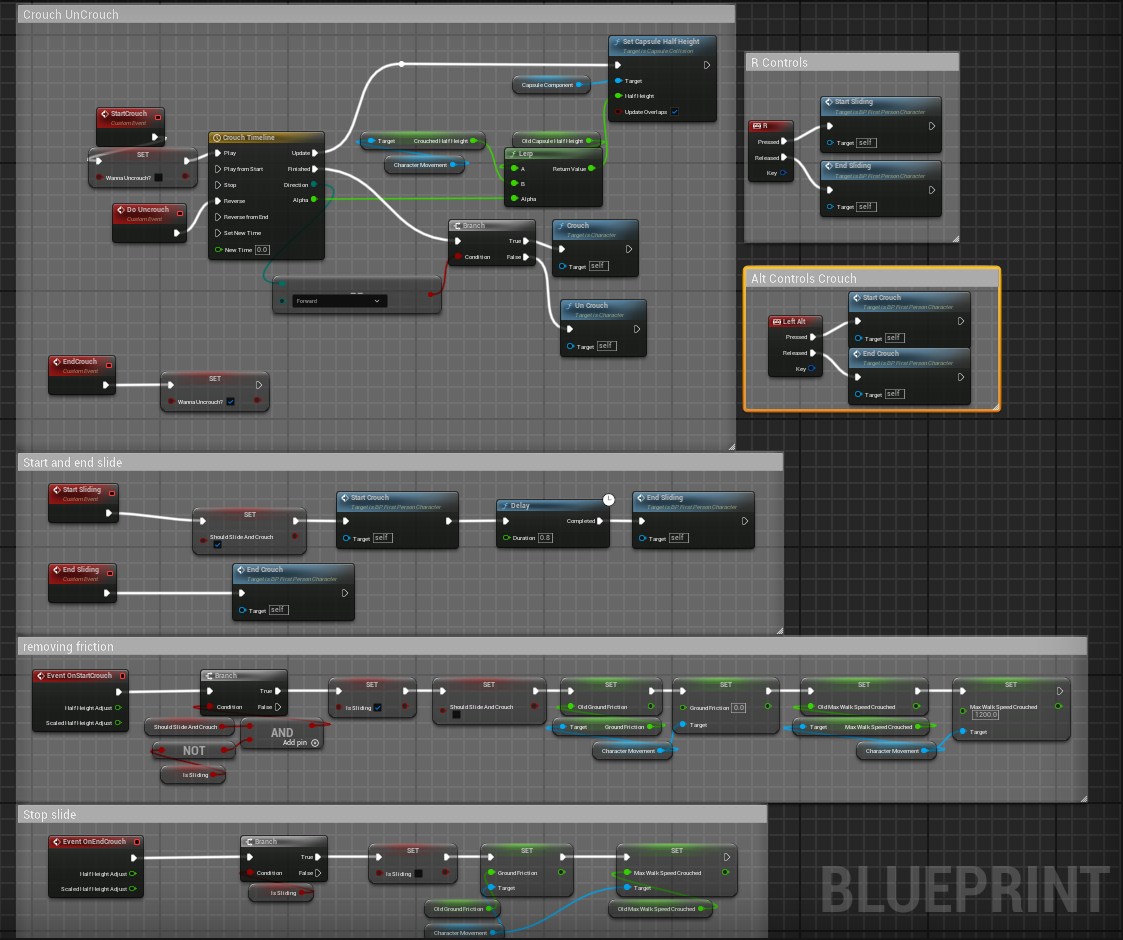
Blueprint graph for crouch, slide start and stop, and removing ground friction.
Momentum-based sliding. Bypasses standard crouch logic to keep velocity: ground friction drops and the capsule height eases on a Timeline, so there's no jarring camera snap.
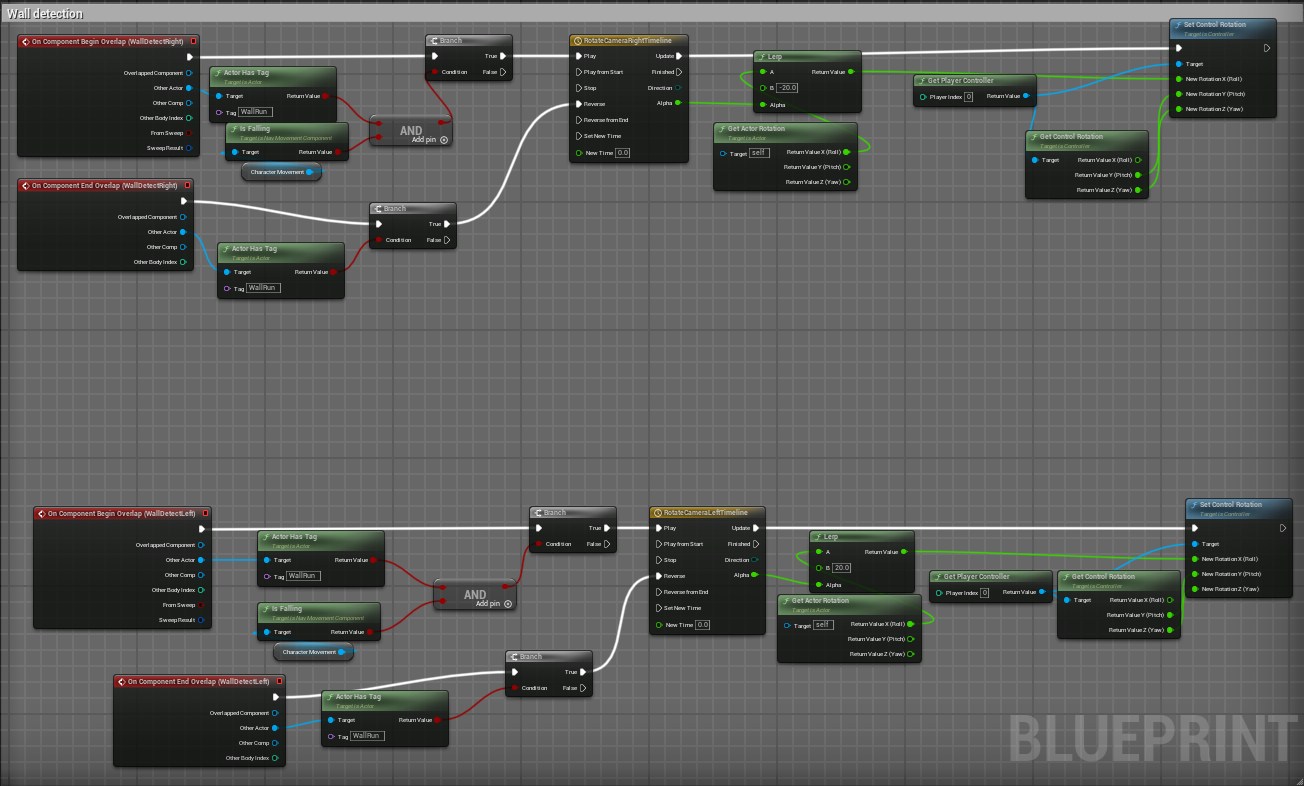
Blueprint graph detecting left and right walls and rotating the camera with Timelines.
Immersive wall running. Collision triggers detect the wall side and smoothly tilt the camera, so the player instantly knows they're locked onto the wall.
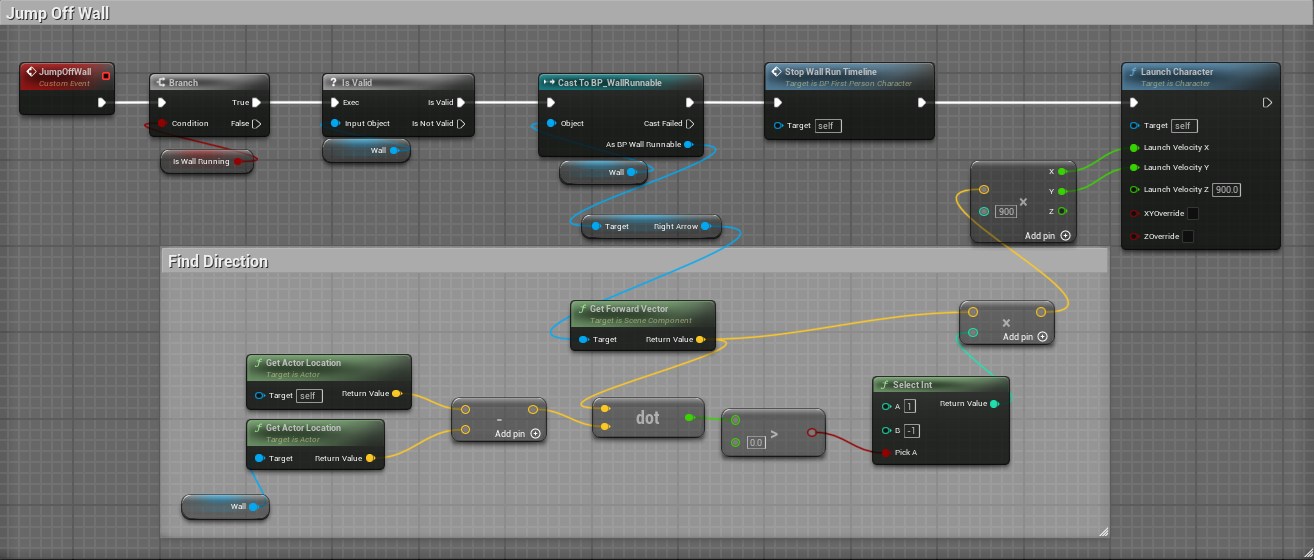
Blueprint graph that uses a dot product to choose the wall-jump launch direction.
Vector-based wall jumping. A dot product picks the launch direction instead of hard-coding it, so the player always leaves perpendicular to the wall, whatever its angle.

07 Key findings

What playtesting taught me

  • Traversal drove engagement. Movement became part of the strategy.
  • Verticality created emergent play through constantly shifting sightlines.
  • Balancing angles was the hardest part. It took several iterations to reach competitive fairness.

“I honestly just enjoy playing it. I wish I could host it and play with a bunch of friends.”

I built double jumping, wall running with a fall-off, sliding that slows down naturally, and crouching, all in Blueprints, aiming for the fluid feel of my favourite FPS games.