Level select

Level 01Lingua Franca

01 / 10

01 Shipped on Steam · Adventure puzzle

Shipped · Steam

Lingua Franca

An adventure puzzle game made by 32 students at the University of Utah. You play as Asa, a teenage girl living on the outskirts of Osaka, Japan, and taking photographs is how the story moves forward.

Role
Level Designer & Puzzle Designer
Team
32 students
Timeline
Aug 2024 – Apr 2025
Engine
Unreal Engine 5
Release
Steam · Mar 28, 2025 · free to play · Mostly Positive reviews
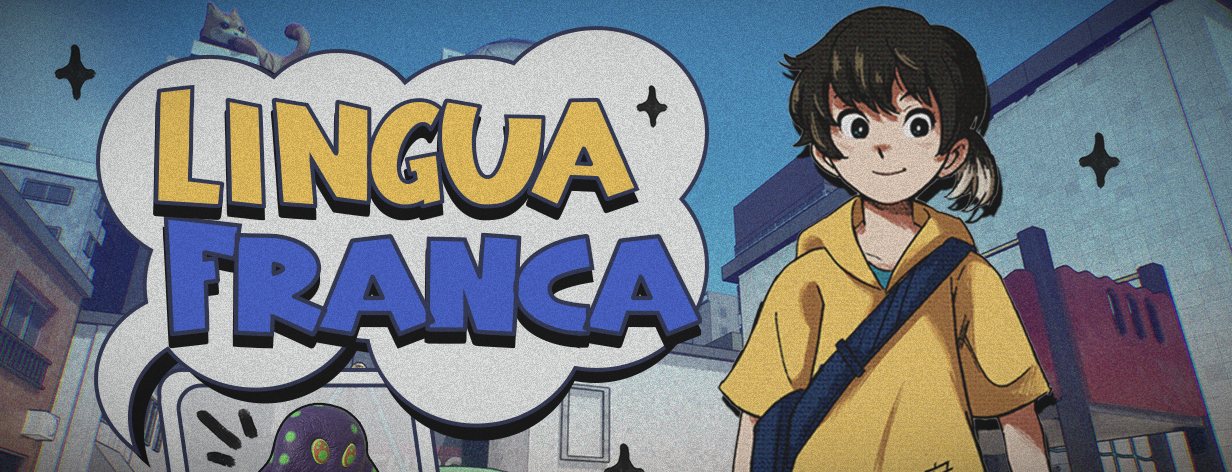
Lingua Franca logo in a speech bubble next to Asa, a girl in a yellow hoodie, on an Osaka street.

02 The result

3.5→8.0

Playtest engagement · +128%

  • ProblemPlayers found the original layout confusing, and playtests scored it 3.5/10 for engagement.
  • InterventionRebuilt it from angled Osaka streets into a block grid, with stronger landmarks and signifiers.
  • ResultEngagement rose from 3.5/10 to 8.0/10 after the redesign.

I owned

  • The neighborhood level, from paper map to final layout.
  • About 33% of the puzzles, including the Heart Puzzle.
  • The quest and dialogue state machine in Blueprints.
  • Playtesting: oversaw sessions and triaged about 250 feedback reports.
  • Design tasks for the department in Trello.

I worked with

  • Narrative on the hint system and dialogue.
  • Engineering, whose tools I built the puzzles with.
  • Art on level and puzzle assets.
  • The vision holder on authentic Osaka versus playful fantasy.

Role by phase: Designer-Producer, then Level Designer-Producer, then Designer-Producer again.

03 Watch

See it in motion

The official trailer, plus my own walkthrough of the game.

04 Creation process

Prototype to gold

  1. Prototype

    From brainstorm to paper to first tests

    • Ran brainstorms as game design lead and co-wrote the GDD with every department's leads.
    • Owned the paper prototypes and early in-engine systems tests.
    • Created and assigned design tasks in Trello.
  2. Alpha

    Balancing authenticity with playful fantasy

    • Bridged the vision holder's authentic Osaka and the design team's push for fantasy.
    • Merged the team's ideas into a paper level of suburban Osaka that I owned.
    • Grey-boxed the first pass in Unreal, folding in narrative and gameplay requests.
  3. Beta

    Iterating puzzles, fixing flow with feedback

    • Built a third of the puzzles, then worked with art to get their assets in.
    • Playtests showed the Osaka street layout confused a mostly American audience.
    • Designed a contextual hint system with the narrative team.
  4. Gold

    Final refinements that boosted engagement

    • Redesigned the level with straighter paths and clearer signifiers: engagement 3.5 → 8.
    • Ran QA and player playtests, and triaged roughly 250 feedback reports.

05 Research & inspiration

Osaka, without having been there

The goal was to capture a quaint Osaka neighborhood. None of us had been, so we researched suburban layouts, aesthetics and how people move through those streets, and pulled out what made the spaces feel authentic.

The paper level zoned the block into residential, commercial and green space, with dead ends and a couple of secrets for curious players.

yes, the cat location is in the legend
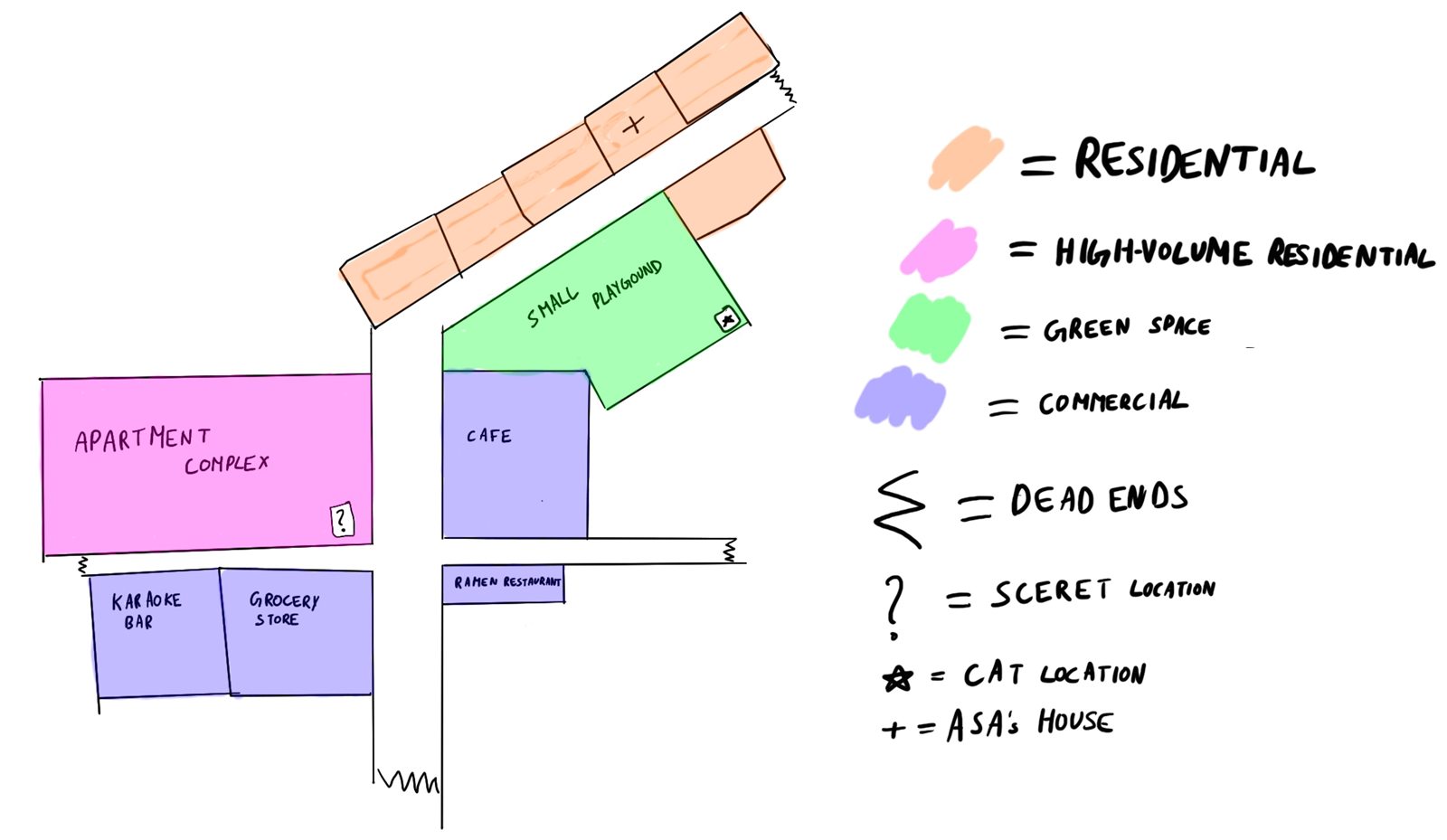
Hand-drawn zoning map: residential, high-volume residential, green space and commercial blocks, with dead ends, a secret location, the cat location and Asa's house marked.
FIG. 01Paper level, zoning pass: residential, commercial, green space, dead ends and secrets.

06 Playtesting & feedback

3.5/ 10

Engagement in early playtests

Then the playtests came back

At the University of Utah's Division of Games, the level scored 3.5/10 for engagement. Feedback pointed to confusing layouts and weak signifiers.

Small tweaks only moved the needle slightly, so we made the call to rework the level drastically.

07 Redesign & iteration

From Osaka streets to a readable block grid

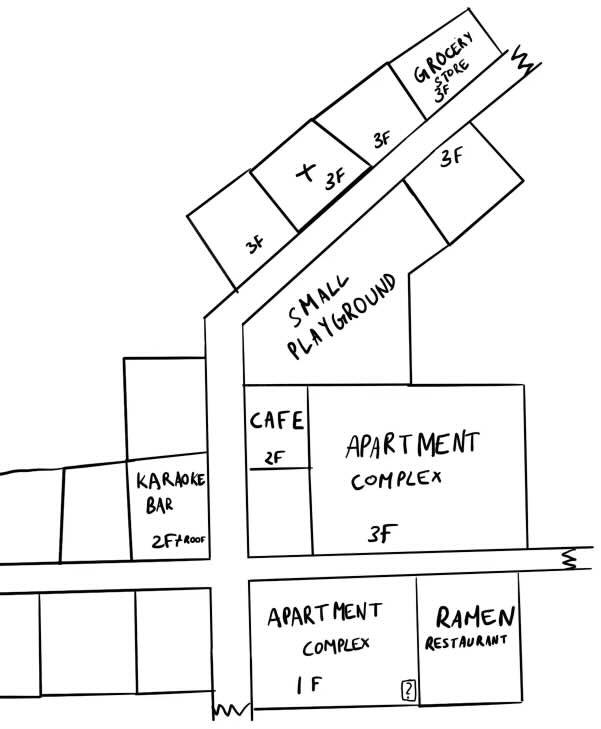
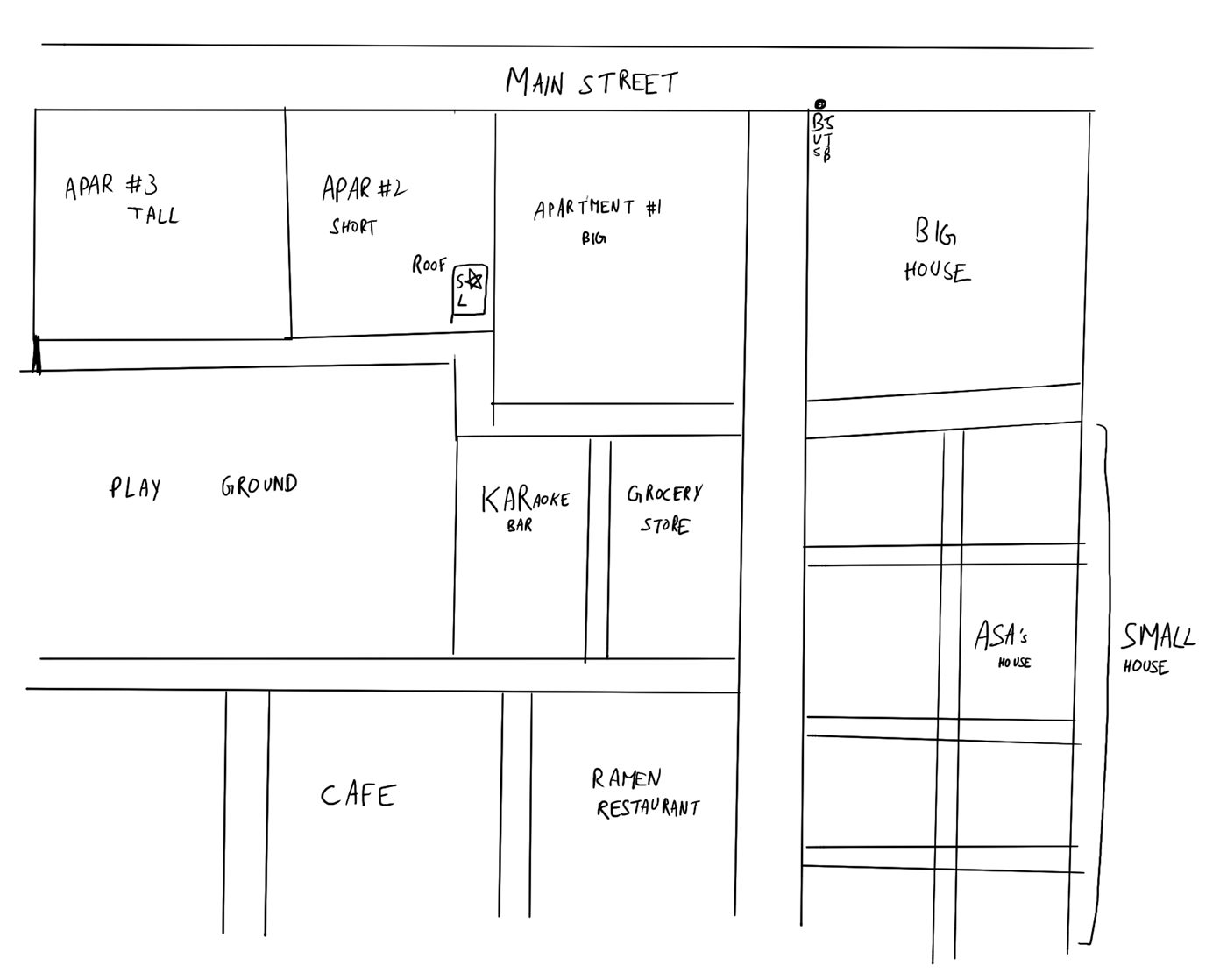
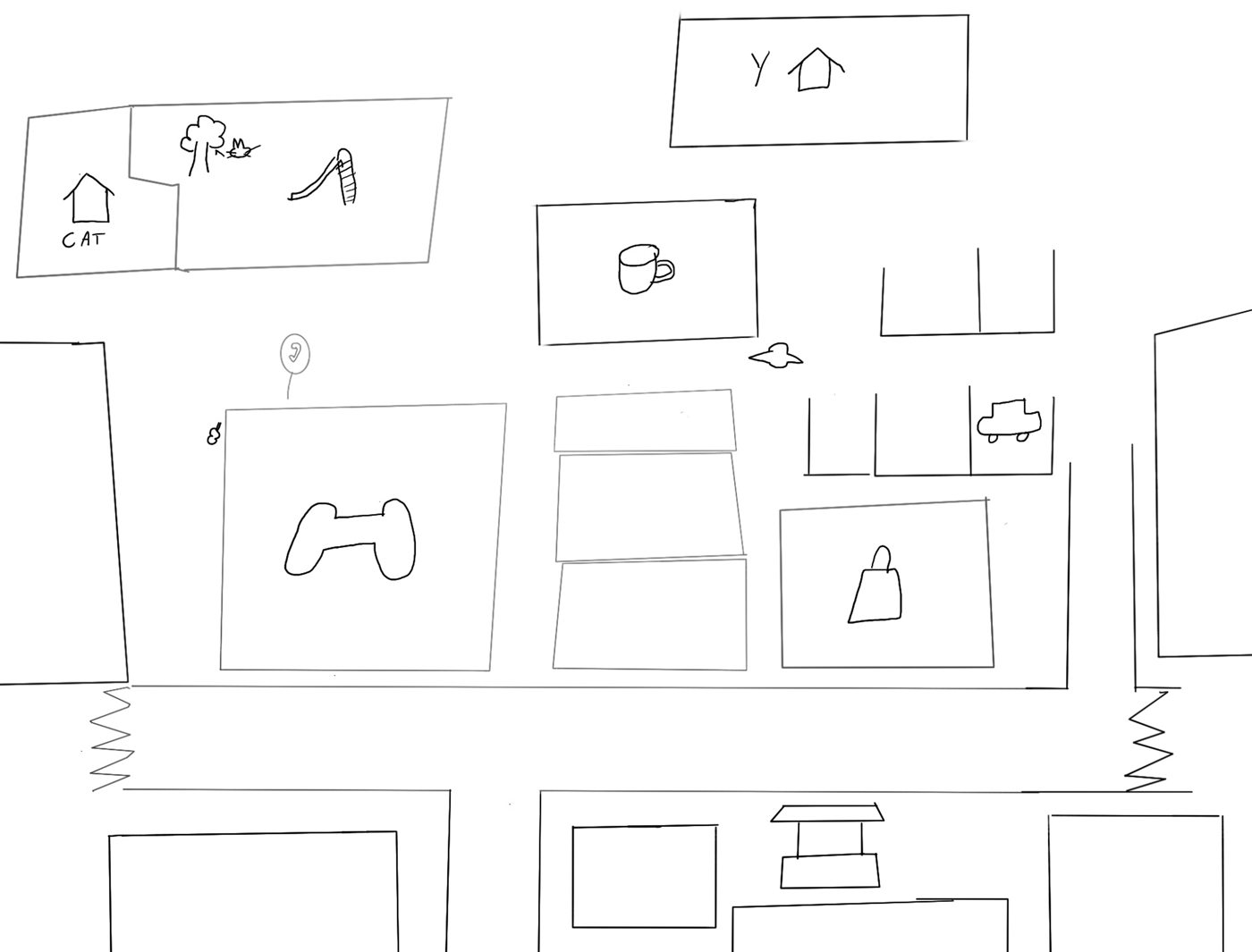
We swapped the traditional Osaka street layout for a Western block-based grid and added stronger landmarks and signifiers, so our largely American playtesters could understand the space and remember it.

Before Original sketch: angled Osaka-style streets around a playground, cafe, karaoke bar, apartments and ramen restaurant.
FIG. 02Original layout: angled streets, authentic but hard to read.
After Redesign sketch: a block grid off Main Street with apartments, playground, karaoke bar, grocery store, cafe, ramen restaurant and Asa's house.
FIG. 03Redesign: a block grid hung off a clear Main Street.
Signifiers Landmark sketch: each block marked with an icon such as a cat, a coffee cup, a game controller, a shopping bag and a car.
FIG. 04Landmark pass: every block gets an icon players can navigate by.

08 Outcome

3.5→8.0

Player engagement after the rework (+128%)

The redesigned map balanced cultural authenticity with accessibility. It also showed how far iteration and player feedback can take an underperforming level.
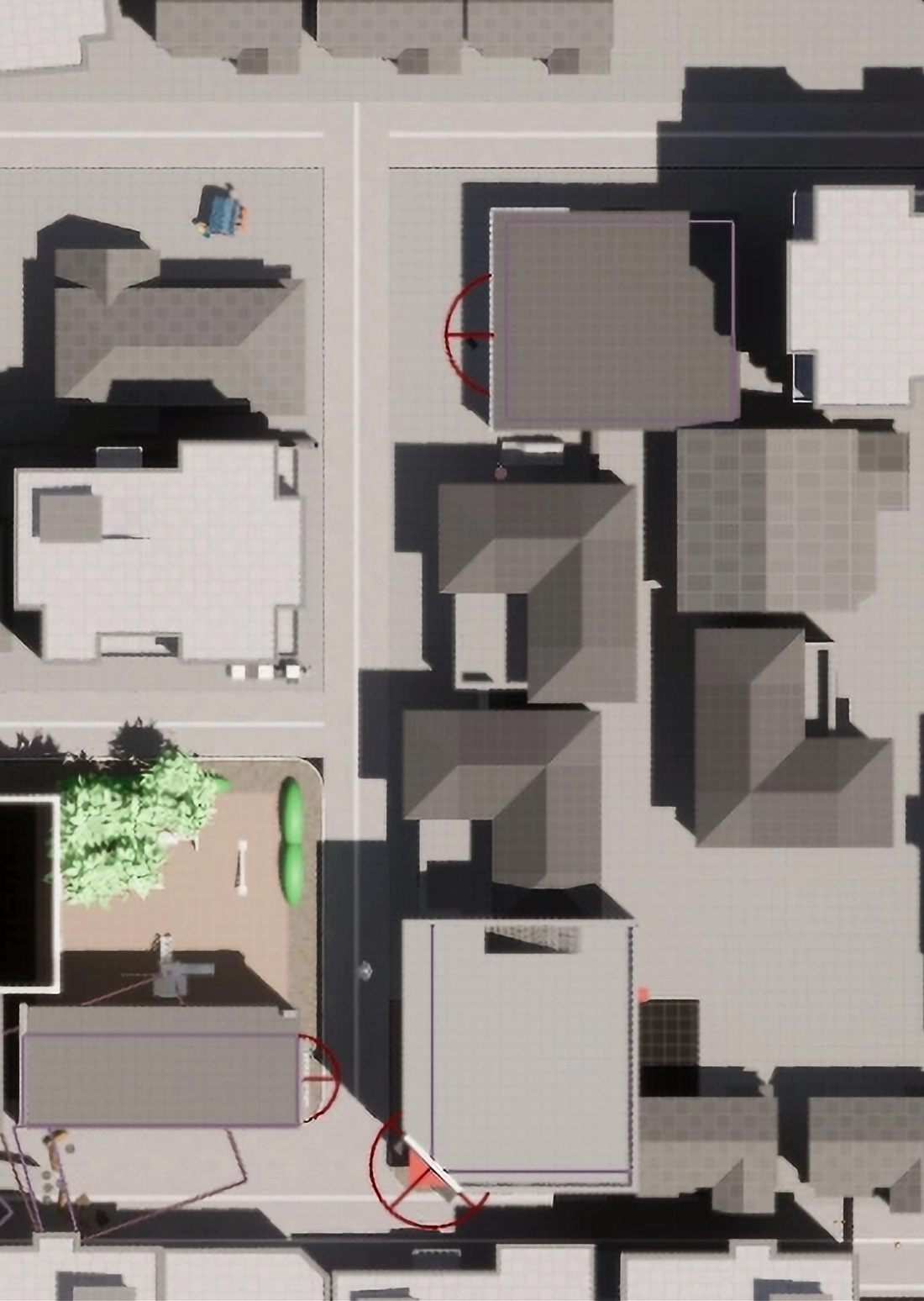
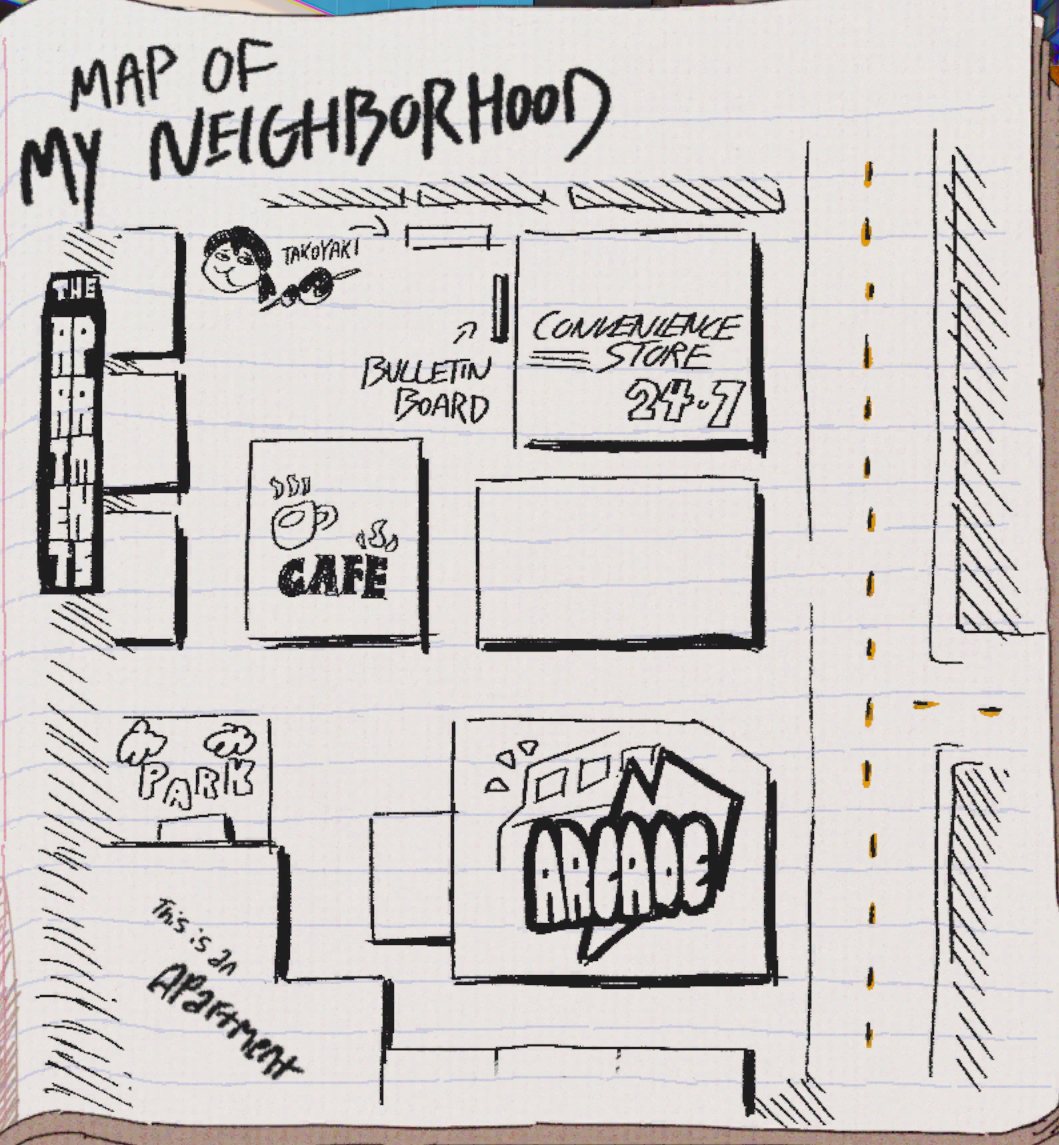
Top-down Unreal grey box of the final level: houses and apartments on a grid of straight streets, with a small park.
FIG. 05Final grey box, top-down.
The in-game map drawn in Asa's notebook: apartments, takoyaki stand, bulletin board, 24/7 convenience store, cafe, park and arcade.
FIG. 06The shipped in-game map.

09 Player interaction

The logic behind every conversation

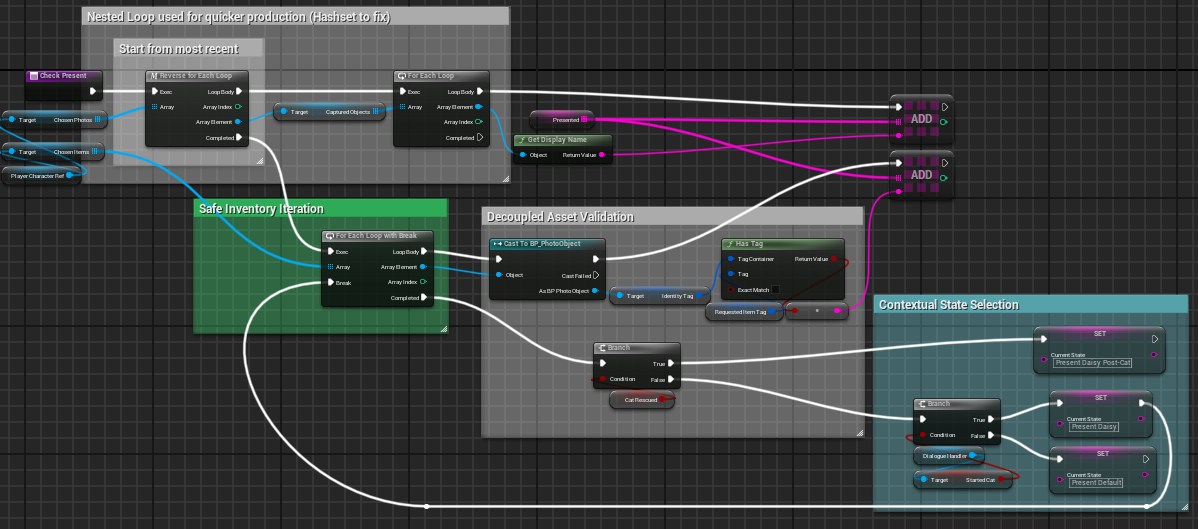
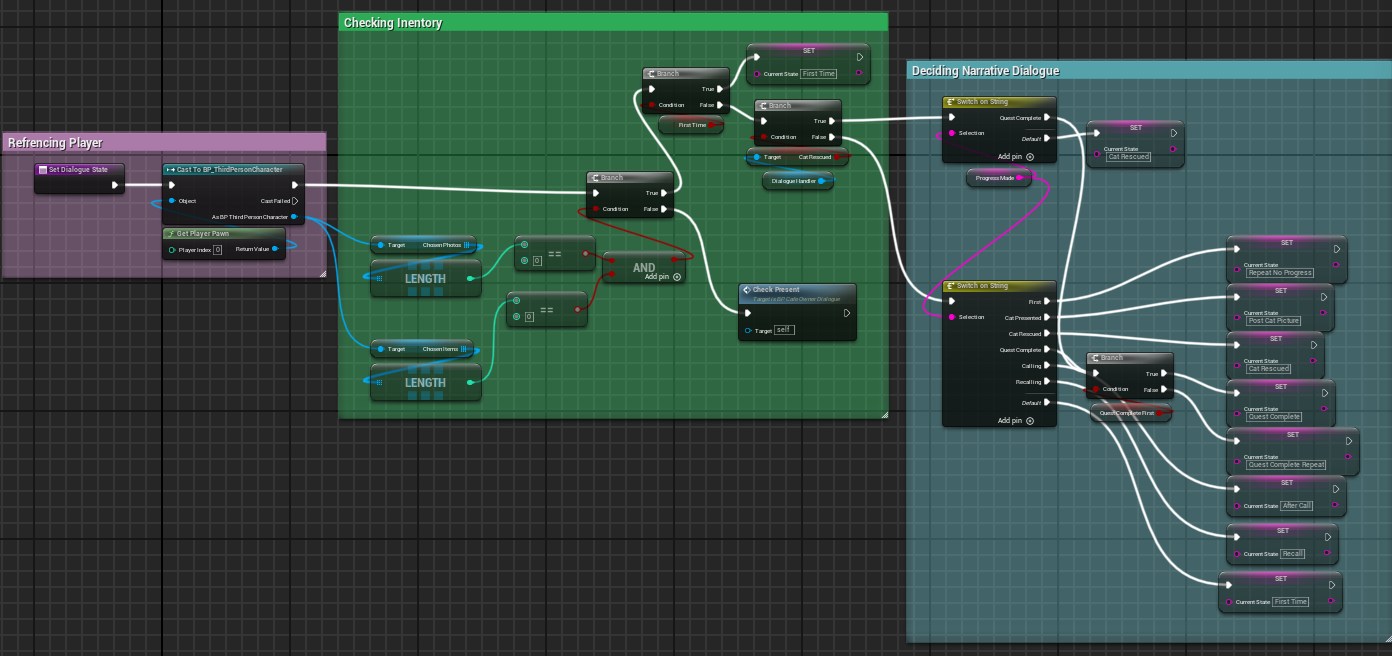
I was the technical bridge between narrative concepts and the engine, building a modular quest and dialogue system in Unreal Engine 5: a context-aware narrative state machine with type-safe class validation and Enum-based quest flow across 25+ branching dialogue nodes, so the logic stays stable, readable and easy to debug as assets change.

Unreal Blueprint graph with sections for safe inventory iteration, decoupled asset validation and contextual state selection.
Context-aware narrative state machine. Reads the player's state, validates mission-critical inventory, and routes the conversation through one central state machine, so the NPC always reacts to where the player is in the quest.
Unreal Blueprint graph that checks the player's inventory and switches between dialogue states such as First Time, Cat Rescued and Quest Complete.
Quest state flow control. A grey-box version of the dialogue branching using string-based logic for quick iteration and debugging. It's the blueprint for a final, type-safe enum system.